
Paediatric & Female Urology
Hypospadias, undescended testis, VUR and female stress urinary incontinence (TVT/TOT).

📋 Clinical Procedure Highlights
- Department: Soni Hospital Advanced Urology & Endosurgery Centre, Ramdaspeth, Nagpur.
- Surgical Technique: Minimally invasive laser, endoscopic, or microscopic intervention with tissue preservation.
- Anesthesia & Safety: State-of-the-art anesthesia with comprehensive pre-operative medical optimization.
- Insurance / TPA: Cashless claim pre-authorization supported for all major health insurance providers.
📋 Key Clinical Takeaways: Paediatric & Female Urology
- Paediatric precision: Congenital conditions like hypospadias and undescended testis (cryptorchidism) achieve optimal anatomical, functional, and cosmetic outcomes when operated early—ideally between 6 and 18 months of age.
- Preserving child kidney function: Vesicoureteral Reflux (VUR) and PUJ obstruction can cause silent, permanent renal scarring if repeated childhood UTIs are ignored. Early endoscopic Deflux (STING) injection or pyeloplasty preserves lifelong kidney health.
- Female dignity & continence: Stress Urinary Incontinence (leakage during laughing, coughing, or exercise) is not a normal consequence of aging. It is definitively curable with minimally invasive suburethral TOT/TVT slings offering >90% long-term success.
- Specialized hospital setting: Soni Hospital provides dedicated private consultation suites with female nursing staff for adult female patients, alongside child-friendly pediatric surgical protocols.
Paediatric urology and female urology represent two deeply sensitive, demanding sub-specialities within modern urological practice. In paediatric patients, surgical intervention must navigate delicate, microscopic anatomical structures where technical precision directly dictates lifelong reproductive, urinary, and psychological wellbeing. In adult women, conditions such as urinary incontinence, pelvic organ prolapse, and recurrent infections frequently cause profound distress, social withdrawal, and silent suffering that require empathetic, private, and evidence-based clinical care.
At Soni Hospital in Ramdaspeth, Nagpur, Senior Consultant Urologist Dr. Rajesh Soni provides comprehensive care across the lifespan. With over 25 years of surgical excellence in reconstructive and endoscopic urology, Dr. Soni offers advanced microsurgical techniques for children and modern, minimally invasive day-care therapies for women.
Part I: Paediatric Urological Reconstruction & Surgery
Congenital urological conditions are among the most common birth anomalies encountered in medicine. Early diagnosis and timely intervention by an experienced reconstructive urologist are essential to prevent long-term functional and psychological consequences.
1. Hypospadias Repair (Snodgrass TIP Urethroplasty)
Hypospadias is a congenital condition occurring in approximately 1 in every 200–300 male births, characterized by three cardinal features: an abnormal urinary meatus located on the underside (ventral aspect) of the penis, a dorsal hooded foreskin with deficiency of ventral skin, and abnormal ventral curvature of the penis during erection (termed chordee).
Depending on the location of the meatus, hypospadias is classified into distal (glanular, subcoronal), midshaft, or proximal (penoscrotal, perineal). Untreated hypospadias causes a downward spraying urine stream, the inability to stand while urinating, and severe sexual difficulty or curvature in adulthood.
- Optimal Timing of Surgery: International pediatric urology guidelines recommend corrective surgery between 6 and 18 months of age. At this stage, tissues are vascular and pliable, healing is rapid, and surgical correction is completed well before the child develops conscious genital awareness or initiates toilet training.
- Surgical Technique: The gold-standard repair performed by Dr. Rajesh Soni is the Tubularized Incised Plate (TIP) or Snodgrass urethroplasty. Under micro-surgical optical magnification with fine instruments, the urethral plate is incised midline and tubularized over a small stent. A vascularized dartos flap is mobilized to cover the neourethra, virtually eliminating the risk of urethrocutaneous fistulae, and the glans is reconstructed symmetrically to produce a slit-like, cosmetically natural meatus.
- Complex & Proximal Repairs: For severe proximal hypospadias with significant chordee, staged repairs (such as the Bracka two-stage procedure using preputial or buccal mucosal grafts) are deployed to ensure an erect, straight penis and dependable urinary caliber.
2. Undescended Testis (Cryptorchidism & Orchidopexy)
During normal fetal development, the testes form near the kidneys and descend through the inguinal canal into the scrotum before birth. In approximately 3% of full-term and 30% of premature male infants, one or both testes fail to reach the bottom of the scrotal sac. Because the internal body temperature is 2°C to 3°C higher than the scrotum, persistent cryptorchidism causes progressive germ cell degeneration, leading to poor adult semen parameters, infertility, and a significantly higher lifetime risk of testicular germ cell tumors.
- Diagnostic Approach: A careful clinical examination by a qualified urologist distinguishes between a true undescended testis, an ectopic testis, and a harmless hyperactive cremasteric (retractile) testis. For impalpable testes, diagnostic laparoscopy is the definitive gold standard to visualize intra-abdominal presence or confirm agenesis.
- Orchidopexy: For palpable inguinal testes, surgical mobilization and placement into a dartos pouch in the scrotum (inguinal orchidopexy) is performed between 6 and 12 months of age. For intra-abdominal testes, a laparoscopic single-stage or two-stage Fowler-Stephens orchidopexy brings the testis safely into the scrotum while preserving collateral blood supply.
3. Vesicoureteral Reflux (VUR) & Childhood Kidney Infections
In a healthy urinary system, the ureters enter the bladder wall at an oblique angle, forming a functional flap-valve mechanism that allows urine to enter the bladder but prevents it from washing backward. In Vesicoureteral Reflux (VUR), this valve mechanism is incompetent, allowing bacteria-laden urine to reflux from the bladder back into the ureters and renal pelvis during voiding.
Recurrent upper tract infections (acute pyelonephritis) in infants and young children can cause irreversible renal parenchymal scarring, hypertension, and chronic kidney disease if left unaddressed.
- Diagnostic Evaluation: Evaluated using renal ultrasonography, Micturating Cystourethrogram (MCU / VCUG) to grade reflux from Grade I (mild) to Grade V (severe with gross hydronephrosis), and DMSA cortical isotope scans to map renal scar formation.
- Endoscopic STING / Deflux Injection: For children with breakthrough infections or intermediate-grade reflux, Dr. Rajesh Soni performs minimally invasive endoscopic injection using Deflux (dextranomer/hyaluronic acid copolymer). Operating through a fine pediatric cystoscope, a small volume of gel is injected sub-ureterally (STING/HIT procedure), building an immediate supportive bolus that restores valve competency. This is a 15-minute day-care procedure with zero incisions.
- Ureteric Reimplantation: For high-grade (Grade IV–V) anatomical reflux, open or laparoscopic cross-trigonal Cohen ureteroneocystostomy provides a definitive surgical cure with >95% success.
4. Pelviureteric Junction (PUJ) Obstruction & Paediatric Pyeloplasty
Congenital narrowing at the junction where the renal pelvis meets the ureter causes progressive hydronephrosis (dilation of the kidney). When dynamic isotope renography (MAG3 / EC scan) demonstrates functional outflow obstruction or falling split renal function, surgical repair is imperative. Dr. Soni performs dismembered Anderson-Hynes pyeloplasty through a tiny cosmetically hidden flank incision or laparoscopically, restoring seamless urine drainage and preventing kidney loss.
5. Phimosis, Paraphimosis & Safe Circumcision
While physiological adherence of the foreskin is normal in infants up to age 3–5, pathological phimosis (scarring of the preputial orifice from recurrent balanoposthitis) requires evaluation. At Soni Hospital, child-friendly day-care circumcision is performed using modern sutureless or fine aesthetic suturing techniques with complete local nerve block anaesthesia, guaranteeing zero pain during recovery.
Part II: Female Urology & Pelvic Floor Reconstruction
Female urological disorders are widespread, yet millions of women suffer in silence for years due to embarrassment, cultural taboos, or the mistaken belief that urinary leakage is a natural and unavoidable consequence of childbearing or aging. Modern urology offers safe, definitive, minimally invasive solutions that completely restore continence and daily vitality.
1. Stress Urinary Incontinence (SUI)
Stress Urinary Incontinence is the involuntary leakage of urine during activities that increase intra-abdominal pressure—such as coughing, sneezing, laughing, jumping, climbing stairs, or lifting heavy objects. It occurs when the supportive endopelvic fascia and pelvic floor muscles are weakened (often following vaginal childbirth, hormonal changes after menopause, or chronic straining), resulting in hypermobility of the bladder neck and urethra.
The Modern Gold Standard: Minimally Invasive Mid-Urethral Slings (TOT / TVT)
While mild SUI can improve with supervised pelvic floor muscle exercises (Kegel therapy) and lifestyle modifications, moderate to severe SUI is definitively cured with a modern Transobturator Tape (TOT) or Tension-free Vaginal Tape (TVT) procedure.
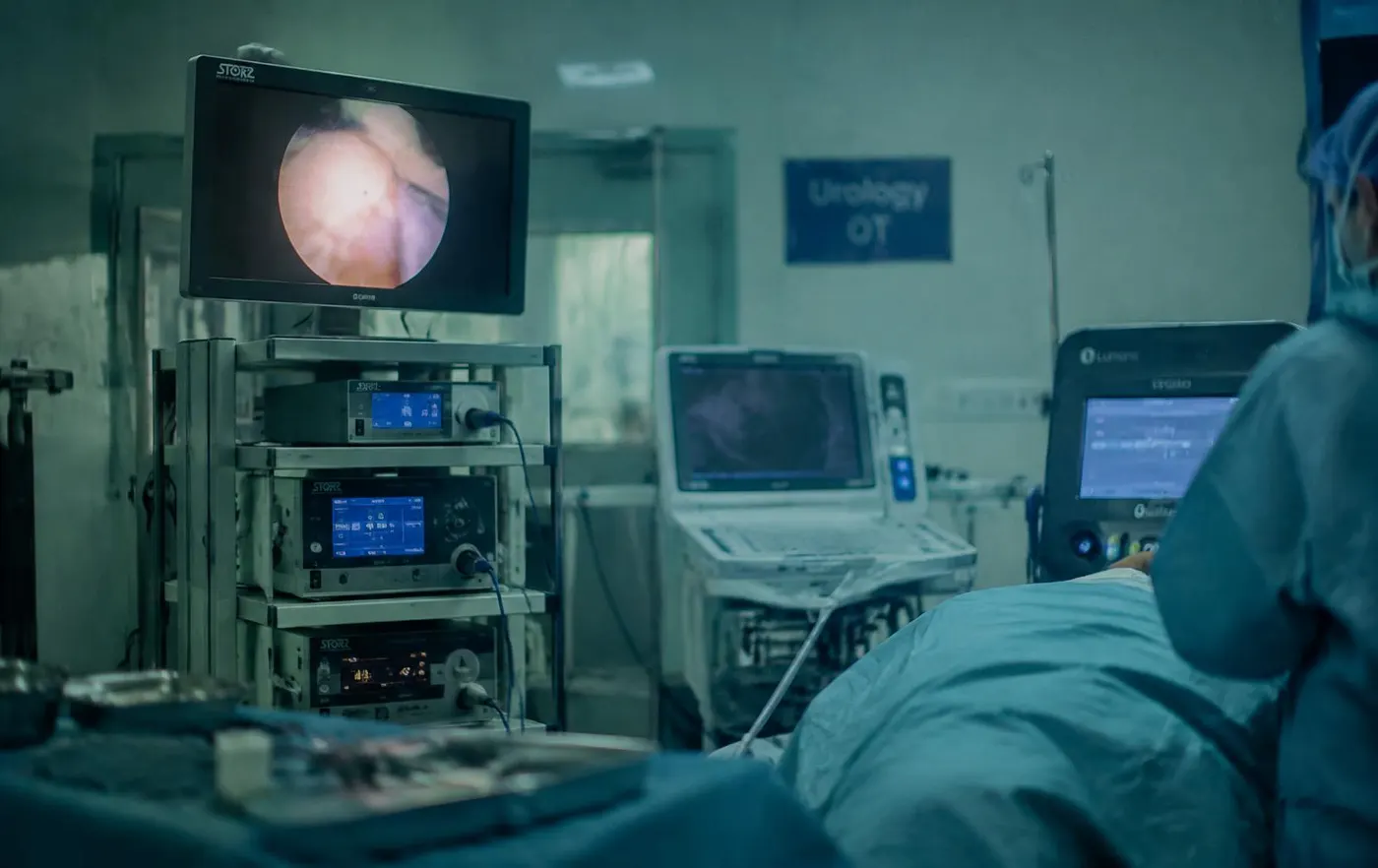
- How the Sling Works: A slender, macroporous polypropylene mesh tape (measuring only 1.1 cm in width) is placed tension-free beneath the middle third of the urethra through a 1.5 cm vaginal incision. The tape creates a permanent supportive hammock. When intra-abdominal pressure spikes during a cough or sneeze, the urethra is compressed against this stable hammock, preventing any urine leakage.
- Day-Care Procedure: Performed under light spinal or regional anaesthesia, the procedure takes only 20 to 30 minutes. It involves no abdominal cuts and causes minimal post-operative discomfort.
- Outstanding Clinical Efficacy: Multiple international randomized clinical trials confirm long-term cure rates exceeding 90% to 95%, with the vast majority of women returning home within 24 hours and resuming normal light activities within 2 to 3 days.
2. Overactive Bladder (OAB) & Urgency Incontinence
Unlike SUI, which is mechanical leakage on effort, Overactive Bladder (OAB) is caused by involuntary, uninhibited spasms of the bladder detrusor muscle. Symptoms include sudden, compelling urges to void that cannot be deferred (urgency), frequent daytime urination (more than 8 times), waking multiple times at night (nocturia), and urge incontinence (leakage before reaching the toilet).
Management follows a structured clinical pathway:
- Behavioral & Fluid Therapy: Bladder retraining, timed voiding, and elimination of bladder irritants (caffeine, artificial sweeteners, carbonated drinks).
- Targeted Medications: Modern selective antimuscarinics (e.g., Solifenacin, Darifenacin) and beta-3 adrenergic receptor agonists (Mirabegron), which relax the detrusor muscle without dry mouth or constipation side effects.
- Intravesical Botulinum Toxin (Botox): For refractory OAB, cystoscopic injection of Botox into the bladder wall provides 6 to 9 months of symptom suppression.
3. Recurrent Urinary Tract Infections (UTIs) in Women
Recurrent UTIs (defined as two or more episodes in 6 months, or three or more episodes in 12 months) are exceptionally common due to the shorter female urethra and its anatomical proximity to the perineum. In post-menopausal women, estrogen deficiency leads to thinning of the vaginal epithelium and loss of protective protective Lactobacillus bacteria, facilitating coliform bacterial colonization.
Dr. Rajesh Soni provides comprehensive diagnostic workups including post-void residual urine ultrasound, targeted urine cultures, and diagnostic flexible cystoscopy to rule out underlying stones, diverticula, or voiding dysfunction. Customized prevention programs combine targeted low-dose antibiotic prophylaxis, non-antibiotic mucosal protective agents (D-mannose, cranberry proanthocyanidins), and topical vaginal estrogen replacement.
4. Vesicovaginal Fistula (VVF) & Pelvic Organ Prolapse Repair
Vesicovaginal fistula—an abnormal communication between the bladder and vagina resulting in continuous, involuntary leakage of urine—is a devastating condition that can occur after prolonged obstructed labour or pelvic surgery (such as hysterectomy). Dr. Soni provides definitive surgical fistula repair via transvaginal or transabdominal approaches utilizing interposition tissue flaps (Martius omental or peritoneal flaps) to ensure sound, leak-proof healing and full restoration of urinary control.
Clinical Comparison: Paediatric vs. Female Urological Conditions
The table below provides a quick comparative overview of the most common paediatric and female urological conditions evaluated and treated at Soni Hospital, Nagpur:
| Clinical Condition | Primary Patient Group | Typical Signs & Symptoms | Definitive Investigation | Gold-Standard Treatment | Hospital Stay |
|---|---|---|---|---|---|
| Hypospadias | Male Infants (6–18 months) | Ventral meatus, hooded prepuce, downward chordee | Clinical genital examination | Snodgrass TIP Urethroplasty | 1–2 Days |
| Undescended Testis | Male Infants (6–12 months) | Empty hemiscrotum, non-palpable or inguinal gonad | Clinical palpation + Laparoscopy | Orchidopexy (Open / Laparoscopic) | Day-care / 24 hrs |
| Vesicoureteral Reflux (VUR) | Children & Toddlers | Recurrent febrile UTIs, abdominal pain, flank tenderness | MCU / VCUG + DMSA scan | Endoscopic Deflux (STING) injection | Day-care (Same day) |
| Stress Incontinence (SUI) | Adult Women (Post-partum/Menopausal) | Urine leakage on coughing, sneezing, laughing, exercise | Cough stress test + Uroflowmetry | Minimally invasive TOT / TVT Sling | Day-care / 24 hrs |
| Overactive Bladder (OAB) | Adult & Elderly Women | Sudden irresistible urgency, frequency >8x, nocturia | Bladder diary + Urodynamic study | Mirabegron / Antimuscarinics / Botox | Outpatient |
| Recurrent Female UTIs | Sexually active & post-menopausal women | Burning micturition, dysuria, frequency, cloudy urine | Urine culture + Post-void ultrasound | Antimicrobial prophylaxis + Topical Estrogen | Outpatient |
The Patient Care Experience at Soni Hospital, Ramdaspeth, Nagpur
Seeking medical care for a young child or for intimate urological concerns can be stressful. At Soni Hospital, our clinical workflows are engineered around patient comfort, dignity, and clinical excellence:
- Private Female Consultations: Adult female patients are seen in dedicated, sound-proof consultation suites with female nursing escorts present throughout examinations and urodynamic testing.
- Child-Centered Environment: Children are evaluated gently with their parents present at every step, minimizing procedural anxiety. Operation theatre protocols emphasize pre-operative soothing, parental presence during anaesthesia induction, and rapid post-op reunification.
- Full Cashless Mediclaim & Insurance Support: Both paediatric reconstructions and female surgical procedures (such as TOT slings, pyeloplasty, and orchidopexy) are covered under cashless Mediclaim and major corporate TPA networks empaneled at Soni Hospital.
Book Paediatric & Female Urology Consultation
Direct consultation with Senior Consultant Urologist Dr. Rajesh Soni at Soni Hospital, Ramdaspeth, Nagpur. Complete the form below to send your consultation request directly to our clinical desk via WhatsApp for prompt confirmation.
Chat & Book via WhatsApp
Direct connection to Dr. Rajesh Soni's Desk
Common questions
The internationally recommended window is between 6 and 18 months of age. At this age, penile tissues heal rapidly, and surgery is completed before the child develops conscious body awareness or begins toilet training.
The intra-abdominal or inguinal temperature is higher than the scrotal sac. If left uncorrected past 12 months, the higher temperature permanently damages testicular germ cells, significantly lowering future fertility and increasing the risk of malignant transformation later in life.
Yes! Stress Urinary Incontinence (SUI) is an extremely common, treatable condition caused by pelvic floor laxity following childbirth or menopause. Modern minimally invasive TOT/TVT suburethral slings cure over 90% of cases permanently through tiny day-care incisions.
Deflux is a biocompatible dextranomer gel injected through a tiny pediatric cystoscope underneath the ureteric opening in the bladder. It creates a robust one-way valve effect that prevents urine from refluxing back to the kidneys, resolving VUR without open surgery.
Yes. At Soni Hospital, Ramdaspeth, Nagpur, TVT and TOT procedures for Stress Urinary Incontinence are eligible for cashless Mediclaim pre-authorization across major insurance providers and TPAs.