
Enlarged Prostate (BPH)
Assessment and treatment of difficult urination in men — from medication to HoLEP.

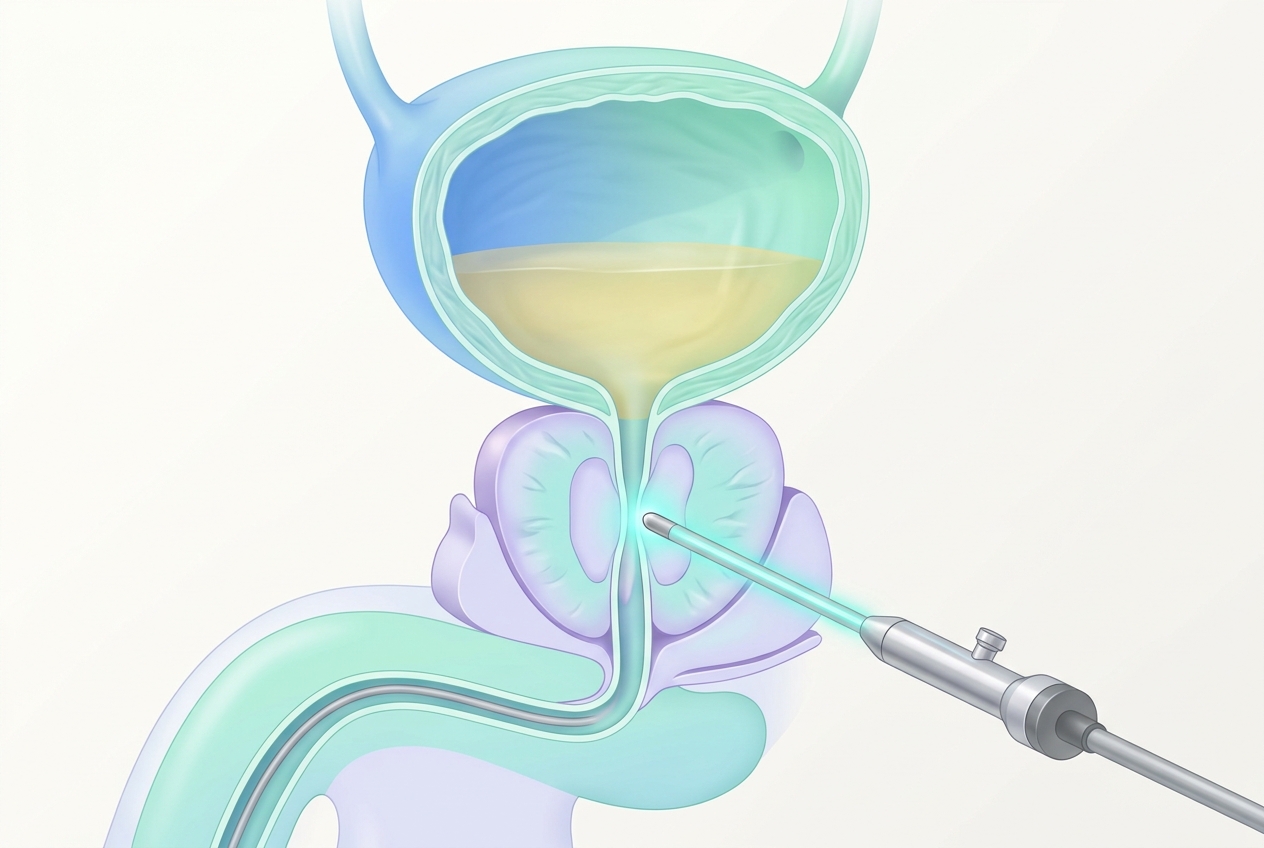
📋 Clinical Procedure Highlights
- Department: Soni Hospital Advanced Urology & Endosurgery Centre, Ramdaspeth, Nagpur.
- Surgical Technique: Minimally invasive laser, endoscopic, or microscopic intervention with tissue preservation.
- Anesthesia & Safety: State-of-the-art anesthesia with comprehensive pre-operative medical optimization.
- Insurance / TPA: Cashless claim pre-authorization supported for all major health insurance providers.
📋 Key Clinical Takeaways: Enlarged Prostate (BPH)
- High Prevalence: Affects over half of men over 50, presenting with urinary hesitancy, poor flow, and frequent night-time urination (nocturia).
- BPH is Not Cancer: It is a benign adenomatous enlargement of the transition zone, but requires PSA screening to rule out concurrent malignancies.
- Risk of Bladder Decompensation: Chronic untreated obstruction can permanently damage the bladder muscle and lead to kidney impairment (hydronephrosis).
- Personalized Stepwise Management: From lifestyle modifications and modern dual-action pharmacotherapy to advanced laser enucleation (HoLEP).
- 25+ Years of Urological Leadership: Dr. Rajesh Soni provides cutting-edge evaluation and surgical precision at Soni Hospital, Ramdaspeth, Nagpur.
Benign Prostatic Hyperplasia (BPH) is among the most frequent clinical diagnoses encountered in adult men worldwide. Nestled directly beneath the urinary bladder, the prostate gland surrounds the initial section of the male urethra like a collar. Under the lifelong influence of male hormones (dihydrotestosterone or DHT), the cells of the central transition zone undergo continuous gradual proliferation. As the gland enlarges from its normal walnut size (20 grams) to 60, 100, or even 200 grams, it progressively constricts the urethral channel.
At Soni Hospital in Ramdaspeth, Nagpur, Senior Consultant Urologist Dr. Rajesh Soni has treated tens of thousands of men suffering from prostate enlargement across Maharashtra, Madhya Pradesh, and Chhattisgarh. Our urology center is built on rigorous diagnostic assessment—combining digitized uroflowmetry, post-void residual ultrasound, and comprehensive symptom scoring—ensuring that every patient receives the precise treatment suited to their stage of life and clinical condition.
BPH Lower Urinary Tract Symptoms (LUTS) Checklist
Review the following common symptoms of progressive prostate enlargement:
-
Urinary Hesitancy & Straining
Having to stand over the toilet for 10 to 30 seconds, pushing with abdominal muscles before urine begins to flow. -
Weak, Thin, or Splitting Stream
A noticeably reduced velocity of urination that takes much longer to complete and may spray or dribble. -
Intermittent Urinary Flow
The stream repeatedly stops and starts mid-flow instead of maintaining a steady, continuous stream. -
Nocturia (Waking Up at Night)
Waking up multiple times every night to void, causing severe sleep fragmentation, fatigue, and daytime exhaustion. -
Sudden Urinary Urgency
An uncontrollable urge to urinate immediately, sometimes leading to embarrassing urge incontinence before reaching the restroom. -
Acute Urinary Retention (Emergency)
Sudden, total inability to pass any urine despite an intensely painful, overfull bladder—requires urgent catheterization.
Diagnostic Evaluation: The Five-Point Prostate Assessment
At Soni Hospital, evaluating an enlarged prostate follows a structured, evidence-based diagnostic protocol:
- International Prostate Symptom Score (IPSS): Quantifies symptom severity and determines the impact on quality of life.
- Digitized Uroflowmetry: A non-invasive test where the patient voids into a computerized funnel. It graphs the flow rate in milliliters per second. A normal peak flow rate (Qmax) exceeds 15 mL/s; in significant BPH, it often drops below 10 mL/s.
- Post-Void Residual (PVR) Ultrasound: Immediately after uroflowmetry, an ultrasound measures how much urine remains trapped in the bladder. Residuals exceeding 100 to 150 mL indicate decompensating bladder emptying.
- Serum Prostate-Specific Antigen (PSA): A routine blood test establishing baseline oncological safety and aiding in prostate volume estimation.
- Gentle Digital Rectal Examination (DRE): Palpates the posterior surface of the prostate to verify size, consistency, and ensure there are no firm nodules suggestive of malignancy.
Treatment Spectrum: From Medical Therapy to Laser Enucleation
We believe in conservative medical management whenever appropriate, advancing to minimally invasive surgery when obstruction threatens bladder health:
| Therapeutic Approach | Mechanism & Indications | Advantages | Considerations |
|---|---|---|---|
| Medical Therapy (Alpha-Blockers + 5-ARIs) | Relaxes bladder neck smooth muscle and shrinks glandular volume | Non-surgical, convenient oral medication | Requires lifelong compliance; does not cure severe large-gland obstruction |
| HoLEP (Holmium Laser Enucleation) | Anatomical enucleation of entire adenoma along the capsule | Size-independent (ideal for 60g–200g+); minimal bleeding; near-zero recurrence (<1%) | Requires advanced surgical laser fellowship training |
| Bipolar Saline TURP | Plasma kinetic loop resection in physiological saline | Time-tested gold standard for glands 30g–60g; excellent tissue debulking | Higher risk of bleeding in massive glands compared to HoLEP |
The Patient Journey at Soni Hospital, Nagpur
Initial Consultation & IPSS Assessment
Thorough evaluation of urinary complaints, medication review, and objective IPSS questionnaire scoring by Dr. Rajesh Soni.
Non-Invasive Diagnostics (Flow & PVR)
On-site digitized uroflowmetry measuring flow rate (Qmax), followed by post-void residual ultrasound and serum PSA testing.
Personalized Treatment Formulation
Clear, empathetic discussion comparing medical therapy versus modern laser intervention, customized to your lifestyle and prostate size.
Incision-Free Endoscopic Procedure
If surgery is needed, HoLEP or Bipolar TURP is performed through natural passages with state-of-the-art lasers and cameras.
Rapid Catheter Removal & Long-Term Relief
Catheter removed within 24 to 48 hours. Patients experience an immediate, powerful urinary stream and peaceful, uninterrupted sleep.
⚠️ Critical Clinical Directive from Dr. Rajesh Soni
Do not dismiss progressive difficulty urinating as simply “getting old.” Chronic untreated urinary retention stretches the bladder muscle beyond recovery, leading to myogenic bladder failure where even surgery cannot restore normal voiding. Seeking timely evaluation protects your bladder and guarantees healthy urinary function well into your senior years.
Book Enlarged Prostate (BPH) Consultation
Direct consultation with Senior Consultant Urologist Dr. Rajesh Soni at Soni Hospital, Ramdaspeth, Nagpur. Complete the form below to send your consultation request directly to our clinical desk via WhatsApp for prompt confirmation.
Chat & Book via WhatsApp
Direct connection to Dr. Rajesh Soni's Desk
Common questions
No. Benign Prostatic Hyperplasia (BPH) is an entirely non-cancerous, non-malignant overgrowth of normal prostate glandular tissue. BPH does not mutate into cancer. However, because both conditions frequently develop in the same age group and share identical symptoms (like weak stream and nocturia), a serum PSA test and digital rectal examination are essential to evaluate both accurately.
Yes. Over 60% of men with mild to moderate BPH are managed effectively with oral medications such as alpha-blockers (relaxing the bladder neck and prostate) and 5-alpha reductase inhibitors (reducing prostate volume over 6 to 12 months). Surgery becomes indicated only if medications fail, produce intolerable side effects, or if complications such as urinary retention, recurrent UTIs, bladder stones, or kidney damage develop.
The IPSS is an internationally validated 7-question clinical tool measuring incomplete emptying, frequency, intermittency, urgency, weak stream, straining, and nocturia. Scores range from 0 to 35: mild (0–7), moderate (8–19), and severe (20–35). It helps Dr. Rajesh Soni objectively track your symptoms and quantify improvement after treatment.
Leaving severe BPH untreated forces the urinary bladder to squeeze against high resistance. Over time, the bladder muscle thickens (trabeculation), forms diverticula, weakens, and ultimately fails (detrusor decompensation). High back-pressure can also damage the kidneys, leading to silent bilateral hydronephrosis and progressive renal failure.
Dr. Soni selects the optimal surgical technique based on exact prostate size on ultrasound, patient age, medical comorbidities, and whether you are taking cardiac blood thinners. For prostates larger than 60–80 grams or patients on anticoagulants, HoLEP is the superior gold standard. For glands under 60 grams, Bipolar TURP is an equally effective, time-tested option.
Modern endoscopic techniques like HoLEP and Bipolar TURP are confined entirely within the prostatic capsule and preserve the external urinary sphincter and erectile neurovascular bundles. Long-term urinary incontinence is exceptionally rare (<1%). Retrograde ejaculation (dry climax) is expected and harmless, as semen enters the bladder and passes out during the next urination, but normal sexual pleasure and orgasmic sensation remain intact.